
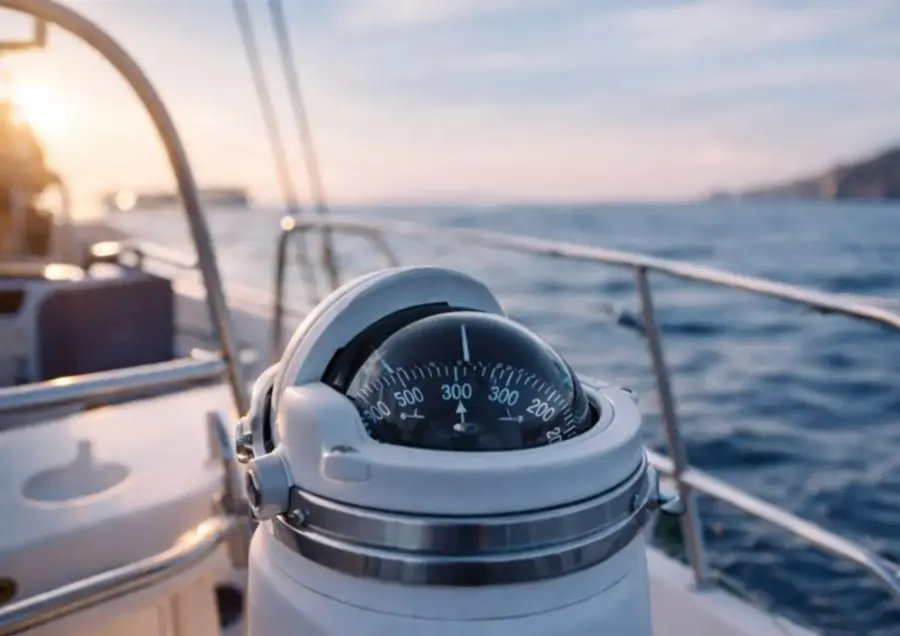
Nautical Compasses for Yachts and Boats: A Complete Guide to Safe Marine Navigation
Despite the rise of GPS, chart plotters, and advanced electronic navigation systems, the nautical compass remains one of the most important instruments onboard any yacht or boat. From recreational sailing to professional yacht operations, compasses provide a reliable, power-independent reference that supports safe navigation in all conditions.
This guide explains how nautical compasses work, the different types used on boats and yachts, how to choose the right compass, and how to correctly calibrate a compass on a sailboat. It also explores how compasses integrate with other bridge instruments to support safe coastal navigation and offshore passages.
Why Nautical Compasses Still Matter in Modern Boating
A marine compass does one thing exceptionally well: it shows magnetic heading regardless of electrical power, satellite availability, or system failure. This makes it a critical safety instrument even on the most technologically advanced yachts.
Electronic navigation systems can fail due to:
Power loss
Water ingress
Electrical faults
Software errors
Antenna or signal issues
A magnetic compass continues to function in all of these situations, which is why it remains mandatory on many vessels and strongly recommended for all boats.
For both motor yachts and sailing yachts, compasses form the backbone of safe navigation, especially during:
Coastal navigation
Restricted visibility
Rough conditions
Long passages
Emergency situations
How a Nautical Compass Works
A nautical compass aligns itself with the Earth’s magnetic field. Inside the compass housing is a magnetised compass card or needle, mounted on a low-friction pivot or gimbal system. This allows the compass to remain level and readable even when the vessel is pitching or heeling.
Key components include:
Compass card or dial
Lubber line (fixed reference line)
Compass dome (often fluid-filled)
Pivot or gimbal system
Illumination for night navigation
The lubber line is particularly important, as it provides the reference point from which the helmsman reads the vessel’s heading.
Types of Nautical Compasses Used on Boats and Yachts
Steering Compasses (Helmsman Compasses)
A steering compass is mounted directly in front of the helm, making it easy for the helmsman to read while steering. These are the most common compasses on yachts and powerboats.
They are designed to be:
Easy to read at a distance
Stable in rough conditions
Suitable for constant use
Popular steering compass designs include bulkhead-mounted, surface-mounted, and flush-mount compasses.
Bulkhead and Surface-Mount Compasses
Bulkhead compasses are mounted vertically on a bulkhead or console face, while surface-mount compasses sit on top of the dashboard or binnacle.
These styles are commonly used on:
Sailing yachts
Motor yachts
Powerboats
Steel and aluminium boats
Their positioning makes them ideal for both seated and standing helmsmen.
Binnacle Compasses
A binnacle compass is mounted in a pedestal or binnacle at the helm. This traditional layout is common on sailing yachts and larger vessels.
Binnacle compasses often include:
Integrated illumination
Larger compass cards
High stability in rough conditions
Hand Bearing Compasses
A hand bearing compass is a portable compass used to take bearings of landmarks, buoys, or other vessels. These are essential tools for:
Coastal navigation
Fixing a position manually
Cross-checking electronic systems
Hand bearing compasses are commonly carried as backup instruments and are useful for both sailors and motorboat operators.
Electronic Compasses
An electronic compass uses sensors rather than magnets and is often integrated into navigation systems. While useful, electronic compasses should always be supported by a traditional magnetic compass due to their reliance on power and electronics.
Choosing the Right Nautical Compass for Your Boat
When selecting a compass, consider the following factors:
Boat Type and Size
Smaller boats may require compact compasses, while larger yachts benefit from larger, more readable compass cards.
Helm Layout
Choose a mounting style that suits your helm position and visibility angle.
Sailing vs Motor Use
Sailing yachts often require compasses that remain readable at higher angles of heel, while motorboats prioritise forward visibility.
Materials and Durability
Marine compasses should feature corrosion-resistant housings and fluid-filled domes designed for harsh environments.
Many professional yachts use well-known compass manufacturers such as Ritchie, Silva, and Plastimo, all of which produce compasses designed specifically for marine use.
How to Calibrate a Nautical Compass on a Sailboat
Compass calibration, also known as swinging the compass, corrects for magnetic interference caused by the boat itself.
Why Calibration Is Necessary
Metal structures, engines, wiring, speakers, and tools can all affect compass accuracy. Calibration ensures these influences are accounted for.
When to Calibrate
You should calibrate your compass:
After installation
After refits or equipment changes
If readings appear inaccurate
At the start of a new sailing season
Step-by-Step Compass Calibration
Choose calm conditions in open water, away from docks and steel structures.
Ensure all electronics are in their normal operating state.
Use a GPS or known transit to establish a true heading.
Slowly turn the boat through 360 degrees, stopping at key headings.
Compare compass readings to true headings.
Adjust the compass correction screws (north–south and east–west).
Repeat until deviation is minimised.
Create a compass deviation card showing remaining errors.
A calibrated compass significantly improves navigation accuracy and confidence.
Using Compasses for Coastal Navigation
In coastal navigation, compasses are used to:
Steer accurate courses
Take bearings on landmarks
Verify electronic navigation systems
Navigate safely in reduced visibility
By combining compass bearings with charts, sailors can determine position even if electronics fail.
Compasses in Rough Conditions
In rough conditions, a well-designed marine compass remains readable and stable. Features such as:
Fluid damping
Gimballed mounts
Clear, direct-read dials
ensure the compass continues to function when it matters most.
Compass Illumination and Night Navigation
Many marine compasses include built-in illumination, allowing headings to be read during night passages without compromising night vision. Proper illumination is an important safety feature for offshore sailing and overnight cruising.
Maintenance and Care of Nautical Compasses
To ensure long-term accuracy:
Keep magnetic objects away from the compass
Check calibration periodically
Clean the compass dome carefully
Inspect illumination regularly
Proper care extends the lifespan of the instrument and ensures reliable performance.
Where to Buy Nautical Compasses Online
High-quality nautical compasses for recreational and professional use can be sourced from specialist marine suppliers such as YACHTNEEDS, which offers a curated selection of steering compasses, hand bearing compasses, and bridge navigation instruments suitable for yachts and boats.
Essential Meteorological Instruments Used on Yachts
Professional yachts rely on a combination of traditional and modern meteorological instruments, each serving a specific purpose onboard.
Nautical clocks provide a dependable time reference for navigation, watchkeeping, and daily operations. Often installed alongside other bridge instruments, they remain a standard feature on yachts, combining functionality with classic marine design.
Barometers are among the most trusted weather instruments at sea. By tracking atmospheric pressure trends, barometers help captains predict approaching weather systems and adjust plans accordingly, particularly during coastal and offshore passages.
Hygrometers measure humidity levels inside the yacht. Managing humidity is essential for protecting interiors, reducing condensation, and preventing mould or moisture damage, especially in cabins, saloons, and enclosed spaces.
Marine Thermometers monitor air temperature and support onboard comfort management. Accurate temperature readings are useful for both operational awareness and guest comfort, particularly in changing climates.
Marine thermohygrometers combine temperature and humidity measurement in a single instrument. These dual-function devices are commonly used on yachts to efficiently monitor interior environmental conditions with minimal space requirements.
Clinometers measure the angle of heel or inclination of the vessel. They are particularly valuable on sailing yachts and during rough sea conditions, providing a clear visual reference of trim and stability.
Weather stations integrate multiple meteorological readings into one system, offering a consolidated view of environmental data. These are ideal for yachts seeking a centralised and easy-to-read weather monitoring solution on the bridge or navigation station.
Final Thoughts: The Compass as a Core Safety Instrument
A nautical compass is more than a traditional instrument—it is a core component of safe navigation. Whether sailing offshore, navigating coastal waters, or operating a motor yacht, a reliable compass provides confidence, redundancy, and situational awareness.
By understanding compass types, selecting the right model, calibrating it correctly, and integrating it with other bridge instruments, boat owners and crew can navigate safely in all conditions.
In an era of digital navigation, the magnetic compass remains one of the most trusted tools at sea—and it continues to earn its place on every yacht and boat.



