
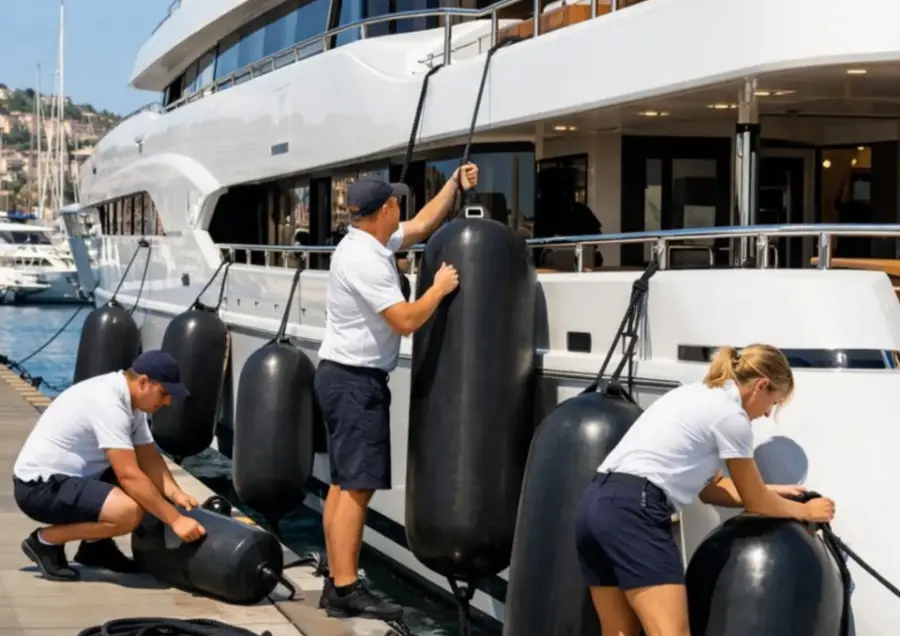
How to Choose the Best Fenders for Your Boat or Yacht
A practical, step-by-step guide to boat fender types, fender size, and real protection for your boat
Why Fenders Are the First Line of Defense for Your Boat
Boat fenders are not accessories. They are the first line of defense between your hull and a dock, piling, pontoon, or another boat. When a vessel is docked—whether in a calm lake marina or an exposed coastal harbor—fenders protect the hull by absorbing energy and spreading load over a larger surface area.
Choosing the right fenders is about protection for your boat, peace of mind, and preventing damage that is far more expensive than the fenders themselves.
This guide explains how fenders work, the different types of fenders on the market, and exactly how to choose the right ones based on the size of your boat, the way you dock, and the conditions you face.
How Fenders Work: The Basics Every Boat Owner Should Understand
Fenders work by compressing under load. When your boat presses against a dock or another vessel, the fender cushions the impact and prevents hard contact with the hull.
The effectiveness of a fender depends on:
-
surface area in contact with the hull
-
fender diameter
-
material elasticity
-
correct placement along the side of the boat
If a fender compresses fully, it stops working. That is why size, placement, and number of fenders matter more than appearance.
Different Types of Fenders on the Market
There is a wide variety of fenders on the market, but most fall into a few common types. Understanding the different types of fenders is the first step to choosing the right protection.
Cylindrical Fenders (The Most Common Boat Fender Type)
Cylindrical fenders are the most popular boat fender type worldwide.
They are typically:
-
inflatable
-
made of vinyl
-
fitted with one or two eyes
-
hung vertically or horizontally
These cylindrical fenders are versatile, affordable, and effective for most docking situations.
Best for:
-
marinas with floating docks
-
docking along the side
-
rafting to another boat
Round Fenders and Ball Fenders
Round fenders (often called ball fenders) provide greater volume in a compact shape.
They are particularly effective when docking near:
-
pilings
-
rough dock edges
-
corners
Because of their shape, they resist rolling and provide excellent cushioning at high-load contact points.
Flat Fenders and Pontoon Fenders
Flat fenders and pontoon fenders are designed to stay in place rather than roll.
They are commonly used:
-
against concrete docks
-
for Med mooring
-
where stable contact is needed
These are also popular as transom mounted fenders and for swim platform protection.
Specialty Fenders
Specialty fenders include:
-
corner fenders
-
fenders made specifically for pilings
-
mounted fenders for permanent installations
These fenders are made specifically for unique docking challenges and are often used on larger boats and yachts.
What Fenders Are Made Of (And Why It Matters)
Most modern boat fenders are vinyl fenders.
Vinyl Fenders
Vinyl is popular because it:
-
is flexible
-
absorbs impact well
-
resists saltwater corrosion
High-quality vinyl fenders are UV-stabilized to resist damage from UV rays, which can otherwise cause cracking and discoloration over time.
Foam-Filled Fenders
Some heavy-duty fenders are foam-filled rather than inflatable. These fenders cannot lose air and are often used where reliability is critical.
How to Choose the Right Fender Size
Choosing the right size and type of fender is the most important decision you will make.
Fender Size Is Based on the Size of Your Boat — But Not Only Length
Many people choose fenders based only on the length of the yacht or the feet of boat length. This is a mistake.
You must also consider:
-
boat length
-
displacement
-
freeboard
-
wind exposure
-
docking conditions
A heavier boat with high freeboard creates more force against a dock than a lighter vessel of the same length.
Fender Diameter: A Critical Measurement
Fender diameter determines how much energy a fender can absorb.
Rule of thumb:
-
Larger diameter = better protection
-
If in doubt, size up
A fender that looks large but has a small diameter may compress too easily and fail to protect the hull.
A Practical Rule of Thumb for Fender Size
A commonly used rule of thumb is:
-
Use one inch of fender diameter for every four to five feet of boat length
This is a starting point only. Boats docked in exposed conditions or against hard docks often require larger fenders.
How Many Fenders Do You Need?
The number of fenders depends on boat size and how you dock.
Typical guidelines per side of the boat:
-
Small boats: three fenders
-
Mid-size boats: four to six fenders
-
Larger yachts: six or more fenders
Using one fender or two is rarely enough for proper protection. Fenders should be spaced along the hull to protect multiple contact points.
Placement of Boat Fenders: Where They Actually Protect
Along the Side of the Boat
Most fenders are placed along the side of the boat where it contacts the dock.
Key placement areas:
-
widest beam
-
forward quarter
-
aft quarter
Fenders protect best when they align with the dock edge at the waterline or slightly above it.
Fenders Should Be Hung Correctly
Fenders should be hung so that:
-
they sit between the hull and the dock
-
they are free to move slightly
-
they do not touch the deck
Incorrect placement reduces protection even if the fender size is correct.
How to Hang the Fender Properly
Knowing how to hang the fender is just as important as choosing the fender itself.
Fender Lines and Knots
Most fenders are attached using fender lines tied with a secure knot such as:
-
clove hitch
-
rolling hitch
-
round turn and two half hitches
The fender line should be long enough to adjust height quickly when docking.
Hanging Fenders From Cleats or Rails
Fenders can be hung from:
-
a cleat
-
a rail
-
a lifeline
Avoid tying fenders too low or too high. Incorrect height is a common cause of hull damage.
Prevent the Fenders From Slipping or Riding Up
To prevent the fenders from moving out of position:
-
adjust line tension
-
use anti-slip knots
-
consider fender racks or clips
Fenders may shift during docking if not secured properly.
Fender Racks, Hooks: Storage and Organization
Fender racks keep fenders:
-
off the deck
-
organized
-
ready for use
They also reduce clutter and prevent damage to the fenders when not in use.
Transom Mounted Fenders and Swim Platform Protection
Why the Transom Needs Special Protection
The transom and swim platform experience different forces than the hull sides.
Common causes of damage include:
-
tenders resting against the platform
-
vertical motion from waves
-
repeated low-speed contact
When to Use Transom Mounted Fenders
Use transom mounted fenders when:
-
operating a tender regularly
-
docking stern-to
-
protecting a painted transom
These fenders are made specifically for this area and provide better coverage than standard side fenders.
Matching Fender Colors: Function vs Appearance
Matching fender colors is mostly aesthetic, but there are practical considerations.
Light-colored fenders:
-
show dirt more easily
-
reduce heat buildup
Dark-colored fenders:
-
hide scuffs
-
may transfer marks to light hulls
Many boat owners choose from a variety of colors to match their boat while still prioritizing function.
Common Types of Boat Fender Setups
Vessel Docked in a Calm Marina
For a vessel docked in a calm lake or protected marina:
-
fewer fenders may be needed
-
standard cylindrical fenders are usually sufficient
Dock or Another Boat
When docking against another boat, additional fenders should be placed to protect both hulls.
Rafting requires more fenders and closer spacing.
Mistakes Boat Owners Commonly Make
-
Using too few fenders
-
Choosing fenders based only on appearance
-
Ignoring freeboard
-
Using the wrong diameter for the size of your boat
-
Forgetting transom protection
-
Not adjusting fenders when dock conditions change
These mistakes reduce protection and increase repair risk.
How to Choose the Right Ones: A Simple Checklist
Before you choose a fender, ask:
-
What type of boat do I have?
-
Where do I dock most often?
-
What is the size of my boat?
-
How much freeboard do I have?
-
Do I need transom or pontoon fenders?
Choosing the right fender means matching size, type, and placement to real use.
Frequently Asked Questions
What are the best boat fenders?
The best boat fenders are those that match the size of your boat, provide sufficient diameter, and are correctly placed along the hull to protect contact points.
How many fenders should I use?
Most boats need at least three fenders per side, while larger yachts often require six or more for best protection.
Are inflatable fenders better than foam-filled ones?
Inflatable fenders offer flexibility and easy storage, while foam-filled fenders provide consistent protection without the risk of losing air.
Do fenders really protect the hull?
Yes. When correctly sized and placed, fenders protect the hull by absorbing impact energy and preventing direct contact with docks or other boats.
Suggested Categories
- Boat and Yacht Fenders
- Chafe Guards
- Superyacht Fender Covers
- Throw Lines
- Fender Hooks
- Custom Transom Fenders
Final Thoughts: Choose Protection, Not Just Accessories
Fenders protect more than gelcoat — they protect your investment.
When you understand how fenders work, how to hang the fender correctly, and how to choose the right size and type, you dramatically reduce the risk of damage and gain peace of mind every time your vessel is docked.
The best fenders are not the most expensive or the most stylish.
They are the ones chosen deliberately, sized correctly, and used properly.
Get in touch with us for the best market prices and bespoke options, including custom colours, logos on fender covers, and tailored fender hooks.



